
ASO School
You can learn about ASO, App marketing, app store optimization and app promotional strategies here and gain the latest app market news and analysis. Helping you to carry out app store optimization and promote app data growth.
Ignored by 99% of people! 5 immediate ASO fine-tuning optimization techniques
2025-12-19
In the app store ecosystem, 65% of downloads come from search traffic, making ASO (App Store Optimization) a core channel for acquiring organic users. Most developers focus excessively on competing for popular high-volume keywords while overlooking the multiplier effect that meticulous optimization can have on ASO performance. This article compiles five cost-effective, granular optimization areas and presents them in the form of practical key points to help you quickly improve end-to-end performance in terms of exposure and conversion.
Long-tail Keyword Strategy: Precisely Capturing High-Conversion Traffic
The core of keyword optimization is “breaking the circle with broad terms + closing with long-tail keywords.” With their advantages of low competition and high match accuracy, long-tail keywords have become a key lever for boosting conversions:
-
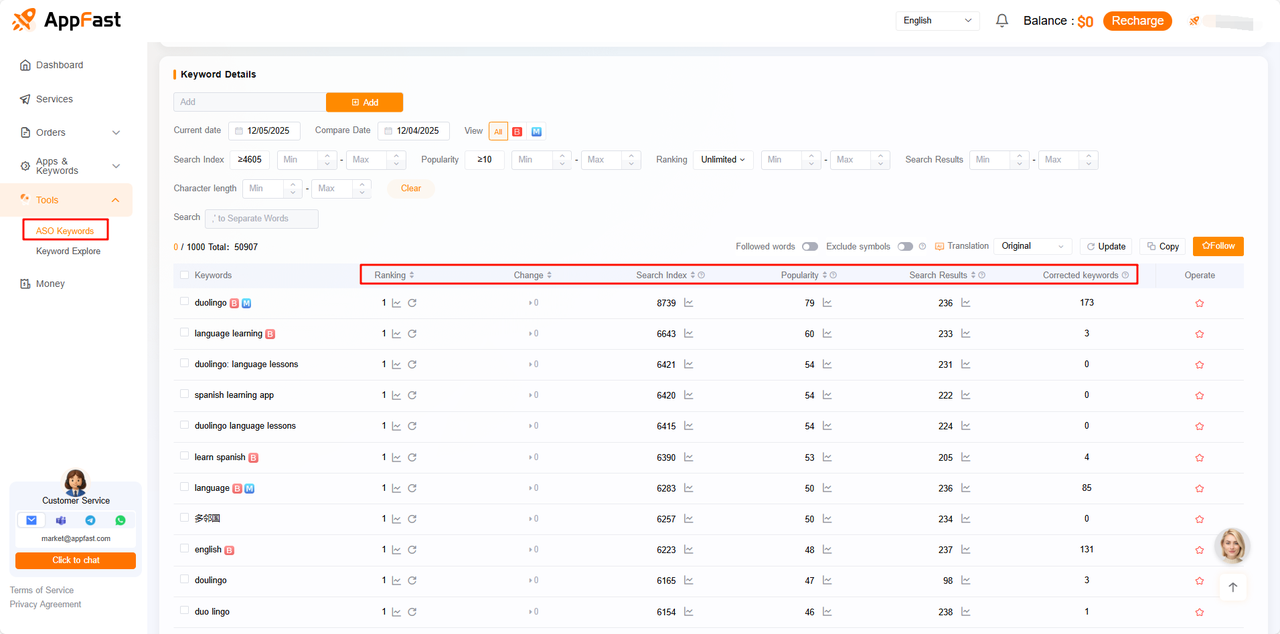
Tool-based research: Use professional tools such as AppFast to analyze competitors’ metadata, search auto-suggestions, and high-frequency words in user Reviews, and filter long-tail keywords with “popularity scores of 10–40” (with priority given to combination keywords of the “feature + scenario” type).
-
Metadata layout: Prioritize embedding core long-tail keywords into the title/subtitle (iOS)/short description (Android), and naturally distribute secondary long-tail keywords across the first three paragraphs of the long description (Android) to avoid keyword stuffing that could lead to reduced relevance rankings.
-
Dynamic adjustment: Establish a long-tail keyword library, update seasonal keywords (such as those related to holidays and industry peak seasons) and regional keywords (in line with localization needs) on a quarterly basis, and simultaneously monitor fluctuations in keyword rankings to promptly replace underperforming terms.
If you’re facing challenges in screening high-conversion long-tail keywords, you can contact AppFast customer service for a free, customized, exclusive keyword library to efficiently implement your metadata layout; at the same time, it can be paired with Keyword Ranking Improvement Service, helping core keywords surge to the top ranks in search results, thereby boosting app visibility and conversions.
Localization Optimization: Expanding Global Incremental Markets at Low Cost
Localization is not merely translation; it involves precise adaptation based on the user habits and cultural differences of the target market.
-
Multilingual metadata setup: Customize titles, keywords, and descriptions separately for each core target market to avoid literal translations (vocabulary must be adjusted to align with local search habits, such as using “ride-hailing” instead of “taxi” for “hailing a ride” in certain regions).
-
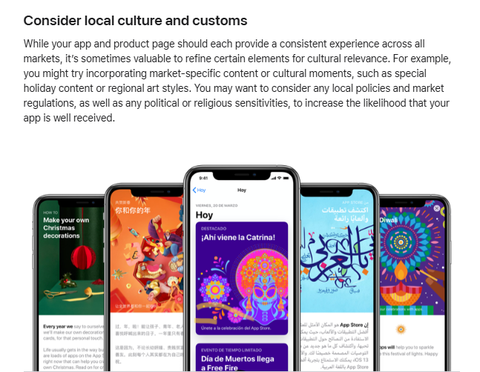
Cultural and scenario adaptation: Visual assets (icons, screenshots, videos) must align with the aesthetic preferences of the target market (e.g., the European and American markets favor minimalist designs, while the Southeast Asian market prefers high-saturation colors). At the same time, details such as currency symbols, units of measurement, and date formats should be adjusted to reduce users’ cognitive load.
-
Demand-side adaptation: By analyzing app store Reviews and local competitor offerings, we distill the core needs of users in the target market (e.g., some regions prioritize privacy and security, while others focus on offline functionality). We then highlight the corresponding selling points in the description to enhance relevance Ratings.
Ratings and Reviews Management: Building a Closed Loop for Trust and Conversion
User Ratings and Reviews directly influence app store algorithmic weighting and user decision-making:
-
Compliance-oriented positive feedback: After users complete the core functions and have a positive experience (such as completing tasks or unlocking benefits), trigger a non-intrusive rating pop-up (iOS must follow the SKStoreReviewController specification, Android should avoid frequent pop-ups), and reject misleading language.
-
Full-volume Reviews response: Thank positive Ratings within 24 hours to strengthen user stickiness; for negative Ratings, communicate to resolve issues (e.g., by providing technical support or compensation plans), publicly respond in the Reviews section with details of improvement measures, and mitigate the impact of negative Reviews on potential users.
-
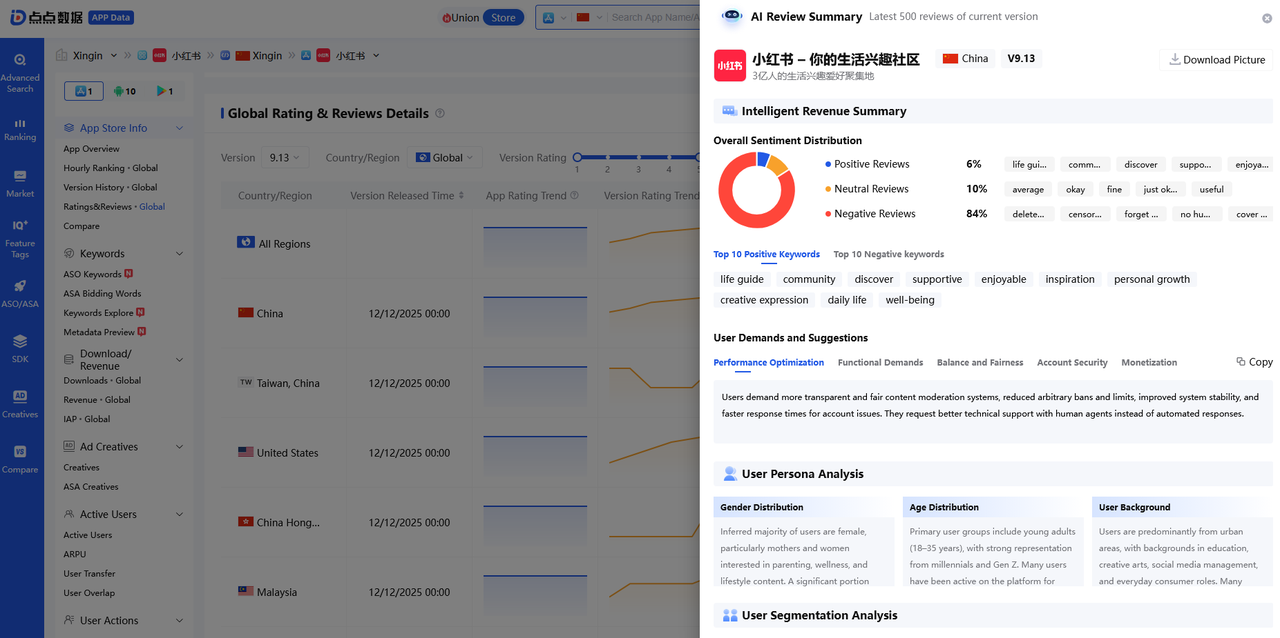
Feedback data feeds back: Use ASO tools to regularly capture high-frequency positive/negative words from Reviews. Positive words can be distilled into descriptions of selling points, while negative words correspond to areas for optimizing product features (such as login issues, lag, and excessive ads). Clearly highlight these improvement points in the update notes.
If you encounter obstacles in obtaining five-star Reviews through compliance guidance, efficiently handling negative Reviews, or improving Ratings, you can contact AppFast customer service to experience professional Ratings optimization service, helping you efficiently accumulate five-star Reviews, steadily boost your app’s Ratings, and strengthen user trust and download conversions.
A/B Testing Optimization: Data-Driven Metadata and Visual Iteration
A/B testing is the core method for validating optimization results, and even minor adjustments can lead to a 10%–30% improvement in conversion rates:
-
Test element priority: Prioritize testing high-weight elements (icons > first-screen screenshots > preview videos). Test only one variable at a time (such as icon color, screenshot layout, or headline keywords) to avoid multiple variables interfering with the interpretation of Results.
-
Tool Selection and Execution: Prioritize official tools, support global/localized testing, ensure the data period is at least 14 days (covering the full user decision-making cycle), and achieve statistical significance in sample size.
-
Iterative optimization mechanism: Establish test profiles to record conversion data (CTR, CVR) for different versions, summarize visual styles and copywriting logic that best suit your product category, and conduct at least one full-dimensional test every quarter to adapt to evolving market aesthetics.
Competitor Monitoring and Differentiation Strategies: Precisely Breaking Through the Red Ocean of Competition
The core of ASO is “know yourself and know your enemy.” Most developers overlook tracking competitors’ dynamics, leading to homogenized optimization strategies that make it difficult to break through:
-
Competitor Core Data Monitoring: Focus on the Top 10 competitors, regularly track their keyword rankings, metadata updates (title/description/visual asset adjustments), Ratings and Reviews trends (new Reviews volume, key feedback points), as well as download volumes and ranking fluctuations, and establish dynamic competitor profiles.
-
Extracting differentiated selling points: Through competitor analysis, identify market gaps—such as feature scenarios not covered by competitors or unmet user needs—or reinforce your own strengths—for example, faster loading speeds, a more streamlined workflow, or a richer set of free features—compared to competitors. Highlight these key differentiators prominently in the title, short description, and first-screen screenshots to create memorable takeaways for users.
-
Dynamic Adjustment of Competitive Strategies: If a competitor increases its investment in a particular type of keyword, you can either “avoid direct confrontation” by shifting to related long-tail keywords or “break through head-on” by optimizing the relevance and conversion data for the same keywords. If the competitor experiences a sudden surge in negative Ratings or Reviews (e.g., due to functional glitches or excessive advertising), you can subtly sidestep these issues in your own product descriptions (e.g., by highlighting “no mandatory ads” or “stable performance”) to attract users who have switched away.
Summary: The Core Logic and Implementation Recommendations for ASO Optimization
The essence of ASO is “algorithm optimization + user need matching + breaking through competition.” The five optimization areas mentioned above form a complete closed loop: long-tail keyword optimization addresses “precision of exposure”; localization addresses “breadth of market coverage”; Ratings and Reviews address “trust conversion”; A/B testing addresses “optimization efficiency”; and competitor differentiation addresses “ability to break through competition.”
Key to implementation:
-
Establish a data monitoring system to track core metrics such as keyword rankings, impressions, CTR, CVR, and competitor dynamics, and deliver an optimization report every week.
-
Optimization priorities: First, complete the foundational management of long-tail keyword layout and Ratings/Reviews (low cost, high return); then advance A/B testing and competitor differentiation (moderate investment, moderate return); finally, deepen localization efforts (long-term investment, high return).
-
Continuous iteration: App store algorithms are adjusted an average of 2–3 times per quarter, so it’s crucial to maintain a consistent optimization frequency to prevent ranking declines caused by static metadata.
Through the refined operations outlined above, you can achieve a significant boost in ASO performance without substantial investment. If you need professional services such as building a keyword library, conducting competitor analysis, or performing metadata diagnostics, you can sign up for our ASO platform to gain end-to-end hands-on support and data insights throughout the entire process.

Navigation
Long-tail Keyword Strategy: Precisely Capturing High-Conversion Traffic
Localization Optimization: Expanding Global Incremental Markets at Low Cost
Ratings and Reviews Management: Building a Closed Loop for Trust and Conversion
A/B Testing Optimization: Data-Driven Metadata and Visual Iteration
Competitor Monitoring and Differentiation Strategies: Precisely Breaking Through the Red Ocean of Competition
Summary: The Core Logic and Implementation Recommendations for ASO Optimization
Free consultation with ASO specialists
Doing ASO for the first time or have no idea how to carry out targeted optimization of your app?
We offer one-on-one customized services provided by app marketing specialists
Related recommendations



Copyright © 2018 - 2021 AppFast Company, LLC. All Rights Reserved. The AppFast word mark is a
registered trademark of AppFast Company, LLC in the US and other countries.