
ASO School
You can learn about ASO, App marketing, app store optimization and app promotional strategies here and gain the latest app market news and analysis. Helping you to carry out app store optimization and promote app data growth.
The Ultimate Guide to ASO Optimization: Precisely Boost Your App Store Keyword Rankings and Downloads
2026-01-30
Meta description:This article shares a comprehensive, professionally grounded ASO optimization guide, breaking down the core techniques for metadata optimization. It teaches you how to scientifically improve your app’s keyword rankings in app stores, leverage multi-dimensional, real-world strategies to boost app downloads, and effectively address the core growth pain points of low app visibility and poor conversion rates.
The mobile app market is now in a white-hot stage of competition, with a flood of new apps being launched every day. Industry data shows that more than 70% of users discover and download apps through app store searches, making ASO optimization the core strategy for apps to acquire organic traffic and reduce customer acquisition costs. Many developers and operators are grappling with key pain points such as low app visibility, poor keyword rankings, and stagnant download volumes—rooted in their lack of mastery over the underlying logic of ASO optimization and actionable, implementable execution strategies. In this article, we will share a fully operational ASO optimization playbook from multiple dimensions—including core value, key levers, practical techniques, and conversion optimization—to help apps enhance their core competitiveness in the market.
The core value of ASO optimization: cracking the core pain points of app growth
The essence of ASO optimization lies in adapting to the algorithmic rules of app stores and users’ search and browsing habits, thereby optimizing the various types of display information for your app within the store to achieve end-to-end conversion: “being found, being clicked, and being downloaded.” For app developers and operators, the core value of effective ASO optimization is reflected in three key aspects:
-
Improve keyword rankings in app stores so that your app appears in higher positions when users search for core keywords, seizing traffic entry points;
-
Optimize end-to-end conversion to effectively turn store-side impressions into clicks, and further convert those clicks into actual app download boosts.
-
Reducing customer acquisition costs: The continuous influx of organic search traffic can effectively reduce spending on paid user acquisition and enhance the overall growth efficiency of the app.
The typical pain points currently faced by ASO practitioners are concentrated in three areas: chaotic metadata optimization, blind keyword placement, and low conversion rates of visual assets. Fortunately, these issues can all be addressed through systematic and standardized ASO optimization strategies.
Metadata Optimization: The Core Leverage for ASO Optimization
Metadata is the core medium through which app store algorithms capture app information and enable users to perceive an app’s value, and it forms the foundation for determining ASO optimization effectiveness. The quality of metadata optimization directly affects an app’s search visibility and click-through conversion, making it the starting point for all ASO optimization efforts. Metadata is divided into two major categories: text-based metadata and asset-based metadata. Different app stores have distinct weighting schemes and rule restrictions for metadata, so optimization must follow a “site-specific” principle.
Text-based metadata: Determines whether the app “can be found”
Text-based metadata is the core basis for app store algorithms to determine keyword relevance, and it also serves as the primary channel for users to quickly understand an app. The core optimization logic involves precisely covering keywords while aligning with users’ search habits, all while strictly adhering to each platform’s character and format limitations. The specific optimization points can be broken down into the following three areas:
-
App name and subtitle
As the highest-weighted text metadata, the App Store requires that titles and subtitles be no longer than 30 characters, while Google Play limits titles to 50 characters. It is recommended to adopt a fixed structure of “brand term + core keyword + core selling point,” placing high-traffic, highly relevant core keywords at the front, using the subtitle to supplement long-tail keywords or user pain-point terms, and avoiding keyword stuffing.
-
Keyword field
This field is exclusive to the App Store and has a maximum of 100 characters. It serves as a crucial battleground for long-tail keyword placement. When optimizing, you should screen for keywords that feature “high search volume + low competition + strong relevance,” arrange them in the order of “core terms + long-tail terms + related terms,” separate them with English commas without repetition, and leverage the algorithm’s automatic splitting function to maximize keyword coverage.
-
App Description
The list page only displays the top 3 lines of content, which are the focus of both algorithmic crawling and user reading. At the beginning, highlight the user’s core pain points and naturally incorporate 2–3 core keywords. Use plain language in the subsequent content to showcase the app’s core features and key selling points, enhancing overall readability. In the long description on Google Play, you may appropriately repeat core keywords, but avoid overstuffing.
Material-type metadata: Determines whether an app “can be downloaded”
Material-related metadata includes app icons, screenshots, preview videos, and the like. It serves as the visual medium through which users intuitively perceive the value of an app. The core optimization logic is to highlight key selling points while lowering the threshold for user decision-making, enabling users to quickly grasp the app’s core functions and core value within 3 seconds. The specific optimization points are divided into the following three areas:
-
App icon
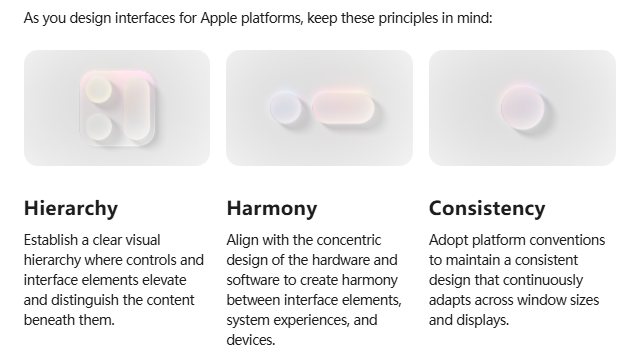
As the first visual element users encounter, it must feature a simple yet eye-catching design with high brand recognition, highlighting the core functional symbol of the app. By using highly saturated contrasting colors, the icon stands out in the store listing, while also being adapted for dark mode to ensure visual clarity across different display scenarios.
-
App Screenshot
The first two screenshots directly determine the click-through rate and must follow the design principle of “front-loading pain points and back-loading results.” Each screenshot should focus on a core feature, paired with concise copy to present the complete logic of “user pain points – solution – usage results.” Subsequent screenshots can then progressively supplement secondary features, avoiding information overload.
-
Preview video
Keep the duration under 30 seconds, using a fixed structure of “3-second hook + 15-second demo + 5-second call to action.” In the first 3 seconds, tap into users’ common pain points to spark resonance; in the middle segment, visually demonstrate the actual operation flow of the core features; and at the end, include a clear download prompt. Add subtitles throughout the entire video to ensure that users can grasp the key information even when the video is played without sound.
If you’re facing challenges in Metadata Optimization—such as imprecise keyword coverage, low creative asset conversion rates, or uncertainty about how to align with platform rules—we can provide professional Metadata Optimization services. By leveraging DianDian Data and combining it with your app category and target user profile, we’ll craft a customized optimization plan that precisely targets high-value keywords, making your app easier to find and more likely to be clicked in the store.

Practical Tips for Boosting App Store Keyword Rankings
App store keyword rankings are one of the core objectives of ASO optimization. The higher an app ranks, the greater its organic search exposure, and the more pronounced its advantage as a traffic entry point. Although the keyword ranking algorithms of major app stores have not been fully disclosed, long-term industry practice has validated that the core influencing factors can be summarized as “keyword relevance + user behavior data + overall app quality.” When optimizing for these factors, actionable, real-world strategies must be developed around these three dimensions.
Scientifically arrange keywords to enhance algorithmic relevance
Keyword relevance is the foundation upon which the algorithm determines app rankings. It requires standardized, end-to-end processes to achieve precise and efficient keyword coverage. The specific steps are:
-
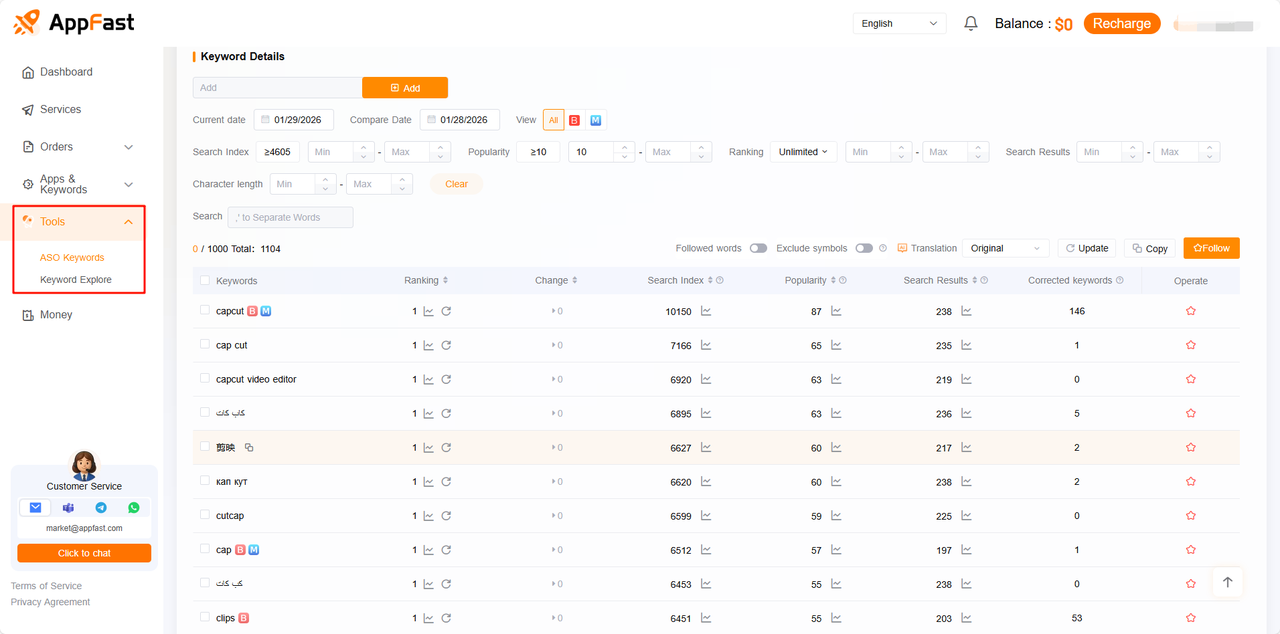
Keyword mining: Leverage AppFast’s professional ASO tools to mine a vast pool of keywords. The core data sources for the initial keyword library should include app store auto-complete terms, related search terms, and competitor keywords.
-
Keyword filtering: Establish screening criteria based on three core dimensions—“search volume, competition level, and relevance.” Prioritize the deployment of high-potential keywords with moderate search volume and low competition, while also balancing the tiered layout of core keywords and long-tail keywords.
-
Keyword layout: Arrange the filtered keywords in order of weight—high to low—across different positions such as the app name, subtitle, keyword field, and app description, thereby forming a comprehensive keyword matrix that ensures all-around coverage by the algorithm.
Optimize user behavior data and strengthen positive algorithmic feedback
User behavior data is a core dynamic factor influencing keyword rankings, primarily including metrics such as clicks, downloads, and positive Ratings. App store algorithms use this real-time data to assess the level of user approval for an app and then assign corresponding ranking weights. The core method for enhancing user behavior data is:
-
Optimize the app’s click-to-download ratio through metadata, ensuring that impressions are effectively converted into actual downloads.
-
Improve user activation rates and reduce post-download churn by optimizing the basic in-app experience.
-
Establish a reasonable mechanism to guide users toward leaving positive Ratings, thereby boosting the app’s overall positive Ratings and strengthening positive feedback in the algorithm.
Enhance the app’s overall quality and solidify the foundation for rankings
The overall quality of an app is the foundational support for keyword rankings and the core basis for the algorithm to assess the app’s value. It primarily includes Ratings, Reviews, version update frequency, and app stability. To optimize these aspects effectively, you can start with the following:
-
Establish a robust Ratings and Reviews management system. Apps with Ratings of 4.5 or higher will receive a higher baseline weight in the algorithm. After users complete core tasks, a friendly pop-up can be triggered to prompt for a reasonable Ratings request. At the same time, negative Reviews from users should be promptly addressed within 24 hours—by answering questions and resolving actual issues.
-
Maintain a steady pace of app version updates, promptly fix bugs encountered during use, optimize core features based on user needs, and continuously enhance the app’s operational stability.
-
We place great emphasis on refining the foundational user experience of the app, optimizing basic dimensions such as operational workflows and page loading speed to enhance users’ fundamental usage experience and reduce the occurrence of negative Ratings.
In the process of optimizing keyword rankings, it’s also essential to conduct ASO competitor analysis: monitor the keyword layouts, ranking changes, and metadata adjustments of core competitors on a daily basis; promptly capture keyword opportunities in the market; follow up on the deployment of high-value keywords; and build your own differentiated competitive advantage.
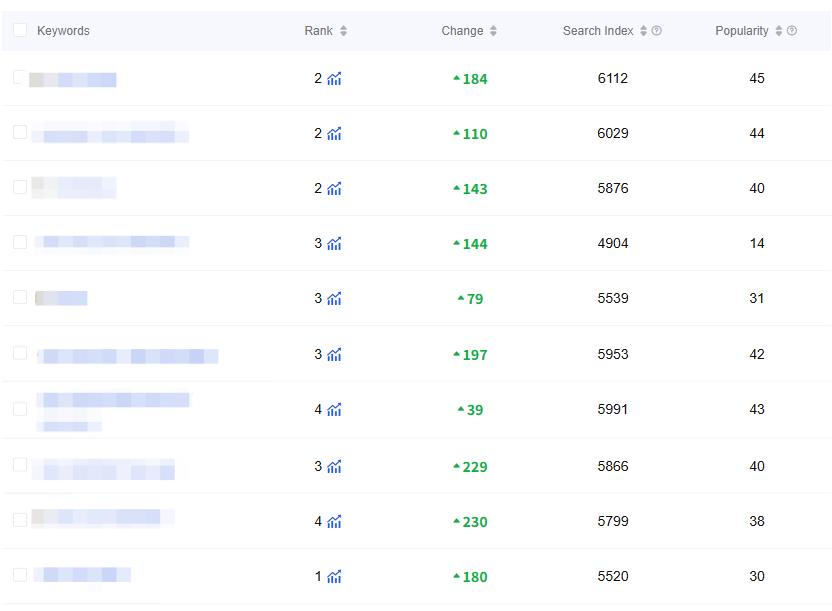
We can provide professionalImproved keyword rankingsThe service leverages DianDian Data to mine high-value keywords through big data and build a scientific keyword matrix, helping your app rapidly improve the rankings of its core keywords, seize the organic search traffic entry points in app stores, and gain more free exposure. QuVideo’s Ratings and Reviews feature provides users with a convenient platform to share their experiences and feedback about the app, fostering a vibrant community where users can exchange insights and recommendations. QuVideo’s Ratings and Reviews feature provides users with a convenient platform to share their experiences and feedback about the app, fostering a vibrant community where users can exchange insights and recommendations.
Conversion Optimization Strategies to Boost App Download Volumes with DianDian Data
Increasing app download volume is the ultimate goal of ASO optimization. Once an app has achieved sufficient store exposure, conversion optimization becomes the core task. The underlying logic is to “eliminate user concerns + strengthen download motivation.” By leveraging various approaches—such as visual assets, social proof, and localized adaptation—we can effectively convert store-side exposure into actual downloads.
-
Strengthen social proof to enhance user trust
When downloading an app, users tend to prioritize Ratings and Reviews from other users as well as endorsements from third-party authorities—this is key to reducing users’ decision-making costs. In the app description and visual assets, you can thoughtfully showcase social proof such as highly rated Reviews, genuine user feedback, authoritative media coverage, and industry-related Awards. For example, “The choice of over 10 million users” or “An efficient productivity tool recommended by a leading platform” can help build trust among users and strengthen their motivation to download the app.

-
Ensure robust localization adaptation to cover more target markets
Whether it’s an app targeting overseas markets or an app serving different regions within China, app store localization is a crucial strategy for boosting conversion. At its core, it goes beyond mere language translation and involves comprehensive localization adjustments, specifically including:
-
Visual asset localization: Adjust the design styles of icons, screenshots, and videos based on the aesthetic preferences of users in different regions. For example, the Southeast Asian market favors high-saturation visual designs, while the European and American markets tend toward minimalist and premium design styles.
-
Feature and selling point localization: By understanding the pain points of users in different regions, highlight the core selling points that align with local needs in the app description, allowing users to feel that the app is tailored specifically for them.
-
Keyword localization: Mine region-specific search terms for users in different areas and integrate them into the text metadata to achieve localized keyword coverage.
-
Continuously optimize conversion assets through A/B testing
There is no standardized benchmark for evaluating the conversion performance of visual assets and copy. Preferences vary significantly across different app categories and target user segments. Therefore, A/B testing is essential to identify the optimization formats that work best for your specific app. During testing, adhere to the “single-variable” principle: change only one optimization element at a time, such as icon style or first-screen screenshots. Focus on monitoring the click-through rate and download volume during the test period, and iteratively refine your creatives based on the test results. A test duration of 2–4 weeks is recommended to ensure you collect sufficient, reliable data from DianDian Data.
Summary: Building Core Competitiveness for Your App Through Scientific ASO Optimization
In today’s increasingly competitive mobile app market, ASO optimization has become an essential capability for an app’s survival and growth. Its core value goes beyond merely boosting app store keyword rankings and increasing app downloads; it lies in aligning with app store algorithms and addressing users’ core needs to build the app’s fundamental market competitiveness. From laying the foundational groundwork of metadata optimization, to precisely improving keyword rankings, and to continuously optimizing the conversion funnel, every stage of ASO optimization must be data-driven, results-oriented, and free from superficial or blindly trend-following tactics.
At the same time, we must be clear that the essence of ASO optimization has always been “user-centric.” All optimization efforts ultimately need to focus on meeting user needs and enhancing the user experience. Only by ensuring that the app’s core value aligns closely with users’ search queries can we achieve a positive conversion loop across the entire funnel—from exposure and clicks to downloads. This enables the app to maintain a competitive edge in the fiercely contested market and achieve long-term, stable growth.
We provide a one-stop ASO optimization service, covering Keyword coverage, metadata optimization, keyword ranking enhancement, download volume boost, and other end-to-end services. Leveraging years of industry expertise and big data analytics capabilities, we tailor an exclusive ASO optimization solution for your app, helping it attract more organic traffic from app stores and build a sustainable growth advantage. Explore our services today and unlock the core key to driving organic growth for your app!

Navigation
The core value of ASO optimization: cracking the core pain points of app growth
Metadata Optimization: The Core Leverage for ASO Optimization
Practical Tips for Boosting App Store Keyword Rankings
Conversion Optimization Strategies to Boost App Download Volumes with DianDian Data
Summary: Building Core Competitiveness for Your App Through Scientific ASO Optimization
Free consultation with ASO specialists
Doing ASO for the first time or have no idea how to carry out targeted optimization of your app?
We offer one-on-one customized services provided by app marketing specialists
Related recommendations



Copyright © 2018 - 2021 AppFast Company, LLC. All Rights Reserved. The AppFast word mark is a
registered trademark of AppFast Company, LLC in the US and other countries.