
ASO School
You can learn about ASO, App marketing, app store optimization and app promotional strategies here and gain the latest app market news and analysis. Helping you to carry out app store optimization and promote app data growth.
Niche App ASO Practical Guide: Optimize Keywords in three Steps to Seize Traffic in Niche Markets
2026-01-23
Introduction: The Dilemma of Traffic Breakthrough for Niche Apps and the Key to Breaking the Impasse
Competition in the mobile app market has entered a white-hot phase of Inventory competition: major players monopolize top-tier traffic, the cost of competing for generic keywords remains sky-high, and niche apps are trapped in a predicament of “difficulty gaining exposure and low conversion rates.” With limited promotion budgets that cannot support hefty paid advertising spend, ASO for niche apps has become the core pathway for acquiring organic traffic at low cost—and keyword optimization is the “traffic code” behind effective ASO strategies.
Unlike the “big and comprehensive” traffic coverage of major players, the key to breaking the deadlock for niche apps lies in targeting specific segments of the market—by optimizing for precise keywords, they can reach users with very specific needs and achieve a traffic breakthrough with a “small but beautiful” positioning. This article breaks down a 3-step, practical approach to keyword optimization, helping niche apps quickly seize traffic in their targeted market segments.
Keyword research: Dig into niche blue-ocean terms to avoid the red-ocean competition of generic terms
Keyword research is the foundation of ASO for niche apps. The core goal is to break free from competition over generic keywords and lock in blue-ocean keywords that offer high relevance, medium-to-high search volume, and low competition. The core pain point for niche apps is “blind keyword selection”: either piling up popular keywords leads to rock-bottom Rankings, or choosing obscure keywords results in zero exposure. Therefore, research must focus on the principle of “precise matching.”
3 Highly Effective Keyword Mining Methods
-
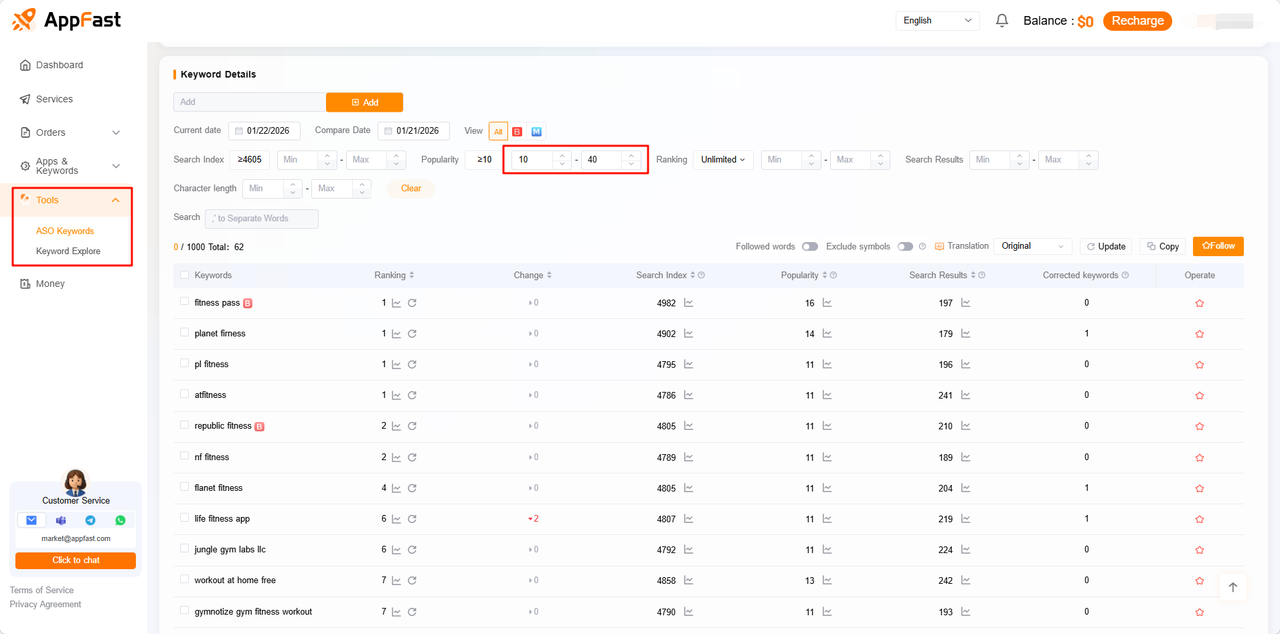
Tool-based filtering method: Use the APPFAST professional ASO tool to set the filter dimensions: Popularity 10–40. Words that meet these criteria can be initially identified as potential blue-ocean keywords and prioritized for inclusion in the keyword library.
-
Competitor Reverse Engineering: Analyze the metadata keyword layout of niche competitors in the same category, with a focus on extracting differentiated keywords from their titles and subtitles. By avoiding competitors’ core keywords and uncovering underserved niche scenario keywords that they haven’t covered, you can achieve dislocation-based competition.
-
User Insights Method: Scrape app store Reviews and high-frequency demand keywords from target user communities to distill users’ genuine search habits. Be sure to filter out colloquial expressions and convert them into standardized keywords that comply with app store search rules.
3 Core Criteria for Keyword Filtering
-
Relevance first: Keywords must be strongly tied to the app’s core features, and irrelevant words chosen merely to “hitch a ride on popularity” should be strictly avoided.
-
Balance search volume with competition: In the early stages, prioritize long-tail keywords with low to medium competition and stable search volume, while letting go of top-tier generic terms like “fitness” or “budgeting.” The advantage of long-tail keywords lies in their precise alignment with user needs, resulting in a conversion efficiency that far exceeds that of generic terms.
-
Align with users’ search intent: Distinguish the demand attributes of keywords—whether they represent “tool-based needs,” “scenario-based needs,” or “price-based needs”—and select matching keywords based on your product positioning to ensure that traffic-driving users overlap with your target users.
If you lack experience in keyword research and can’t accurately filter out blue-ocean keywords, you can contact APPFAST’s business team.Get keyword library— AI tools + manual Reviews help you identify 50+ high-conversion keywords for your niche app, allowing you to sidestep competition from big players and directly target your ideal users.
Keyword layout: Maximize weight to leverage every character for driving traffic
After keyword research is completed, the core task is to strategically incorporate these keywords into the app’s metadata, leveraging the app store’s “position weighting rules” to boost rankings. A common misconception among niche apps is keyword stuffing or improper placement of keywords, which leads to dispersed Weight and prevents effective exposure even when the keywords are highly relevant.
Metadata weight priority and layout strategy
In app stores, keyword weight ranking is as follows: app title > subtitle (App Store)/short description (Google Play) > keyword field (App Store only) > app description (Google Play). Layout must adhere to the principle of “placing core terms first, supplementing with long-tail terms, and maximizing character utilization with zero waste.”
-
Title Optimization (within 30 characters): Use the structure “Brand Name + Core Keyword + Niche Selling Point,” placing the core keyword at the front to secure the highest weight. The title should be concise, avoiding repetitive words; every character must contribute to both keyword rankings and user conversion.
-
Subtitle/Short Description Optimization: For the App Store subtitle (within 30 characters), add secondary core keywords and unique selling points. For the Google Play short description (within 80 characters), balance keyword coverage with user appeal: the first 20 characters must include core keywords and core value to boost click-through rates.
-
Keyword field optimization (App Store only): Within 100 characters, use commas to separate keywords—no spaces and no repetition of title/subtitle terms. Add scenario-specific keywords to broaden coverage of long-tail terms. Prioritize high-potential blue-ocean keywords and avoid irrelevant keywords that consume character space.
-
App description optimization (Google Play): The first 3 lines are the “golden position” and must include core keywords and core value to quickly capture users’ attention. Use symbols to list features in the main body, naturally incorporate long-tail keywords to avoid a cluttered feel, and highlight the app’s advantages in specific niche scenarios.
3 Core Points to Avoid Pitfalls in Layout
-
Eliminate keyword stuffing: Core keywords in the title or subtitle should be distributed naturally; avoid repetitive keyword stacking.
-
Emphasize localization optimization: Overseas apps need to adjust keywords for their target markets, aligning with local language habits and search preferences to avoid semantic deviations caused by machine translation.
-
Efficient character utilization: Do not fill the keyword field with competitor terms or redundant singular/plural variations, and remove irrelevant popular terms to ensure that every character is used to cover precise keywords.
Don’t understand metadata weighting rules and struggle to efficiently layout keywords? Our metadata optimization service offers a customized solution: a dedicated team optimizes your title, subtitle, keyword fields, and descriptions based on your use case and target market, maximizing keyword Weight and boosting search visibility and click-through conversions.

Keyword Iteration: Data-Driven Optimization to Achieve Continuous Traffic Growth
ASO for niche apps is not a one-time effort. Keyword rankings and user search habits fluctuate with market changes, and a lack of a long-term iterative mechanism can lead to stagnant traffic growth. Many niche apps see short-term gains after optimization, but their traffic declines over time—the core reason being the neglect of data-driven iterative optimization.
Core Monitoring Metrics and Analysis Methods
-
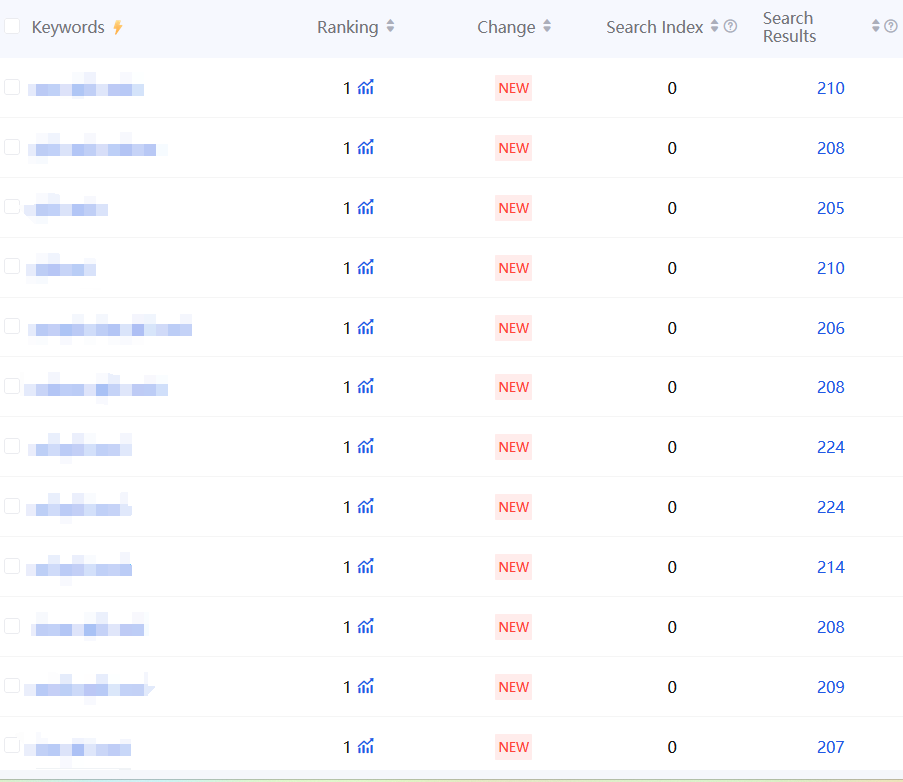
Keyword Rankings Monitoring: Track changes in the rankings of core keywords, with a strong focus on terms within the Top 20. If a keyword’s ranking declines for two consecutive weeks with no signs of recovery, promptly analyze the underlying causes or replace it with a high-potential alternative.
-
Conversion funnel analysis: Monitor end-to-end data across the entire journey from “search exposure → click → download.” If exposure is high but clicks are low, you need to optimize visual assets such as icons and subtitle text. If clicks are high but downloads are low, you need to refine the value propositions in your app description.
3 Practical Strategies for Iterative Optimization
-
Regularly replace low-efficiency keywords: Conduct keyword iteration every 2–4 weeks, eliminating underperforming keywords with low Rankings and poor conversions, while adding newly discovered high-potential long-tail keywords. Iteration should follow the “small steps, fast pace” principle, replacing no more than 30% of keywords each time to avoid excessive fluctuations in Weight.
-
A/B testing optimization: Test the effectiveness of different keyword combinations in titles and subtitles, and launch the version with the highest conversion rate. The testing period should be long enough to ensure that the data is meaningful and serves as a reliable reference.
-
External traffic feeds back into ASO: Embed core keywords on social media, the official website blog, and other channels to guide users to perform searches in app stores, thereby boosting the popularity of these keywords in user searches and enhancing app store Rankings.
Want to see your keywords rank more steadily and your download numbers keep growing? Our Improved keyword rankings The service helps niche apps establish traffic barriers in their respective niche markets, enabling a steady increase in organic downloads.
Conclusion: The core of ASO for niche apps is “precise and in-depth cultivation”
For niche apps, the essence of ASO lies not in competing with big players for general traffic, but in using keyword optimization to find a “blue ocean of uncompetitive territory” within niche markets.
From conducting precise research to uncover blue-ocean keywords, to strategically optimizing your app’s structure to maximize its weight, to leveraging data-driven insights for continuous iteration, these three steps are tightly interconnected and form a complete closed loop for niche apps to break through in the crowded traffic landscape. ASO optimization does not yield short-term results; typically, 1–3 months of continuous iteration are required to see stable and consistent improvements. However, as long as you adhere to the principles of “precise targeting, value-driven optimization, and long-term focus,” niche apps can fully leverage keyword optimization to acquire high-quality organic traffic at the lowest possible cost, enabling them to gain a firm foothold in the fiercely competitive market.
If you’re struggling to acquire traffic for your niche app, why not start with keyword optimization—whether you need precise keyword research, professional metadata optimization, or want to boost your keyword rankings and download numbers, you can Contact Us, Get a tailored ASO practical solution to help your app quickly stand out in its niche market.

Navigation
Introduction: The Dilemma of Traffic Breakthrough for Niche Apps and the Key to Breaking the Impasse
Keyword research: Dig into niche blue-ocean terms to avoid the red-ocean competition of generic terms
Keyword layout: Maximize weight to leverage every character for driving traffic
Keyword Iteration: Data-Driven Optimization to Achieve Continuous Traffic Growth
Conclusion: The core of ASO for niche apps is “precise and in-depth cultivation”
Free consultation with ASO specialists
Doing ASO for the first time or have no idea how to carry out targeted optimization of your app?
We offer one-on-one customized services provided by app marketing specialists
Related recommendations



Copyright © 2018 - 2021 AppFast Company, LLC. All Rights Reserved. The AppFast word mark is a
registered trademark of AppFast Company, LLC in the US and other countries.